Six features give the village its special character: The mountainous coast. The village life. No cars, no roads. The superb weather. The ancient history. And the absence of mass tourism, only day-trippers on boats. Each of these is described in turn below.
With these wonderful features there is no need for flowery phrases or exaggeration. None of your 'steeped in the history of time'. 'Wine dark seas'. Or 'Sunkissed terraces'. The facts speak for themselves.
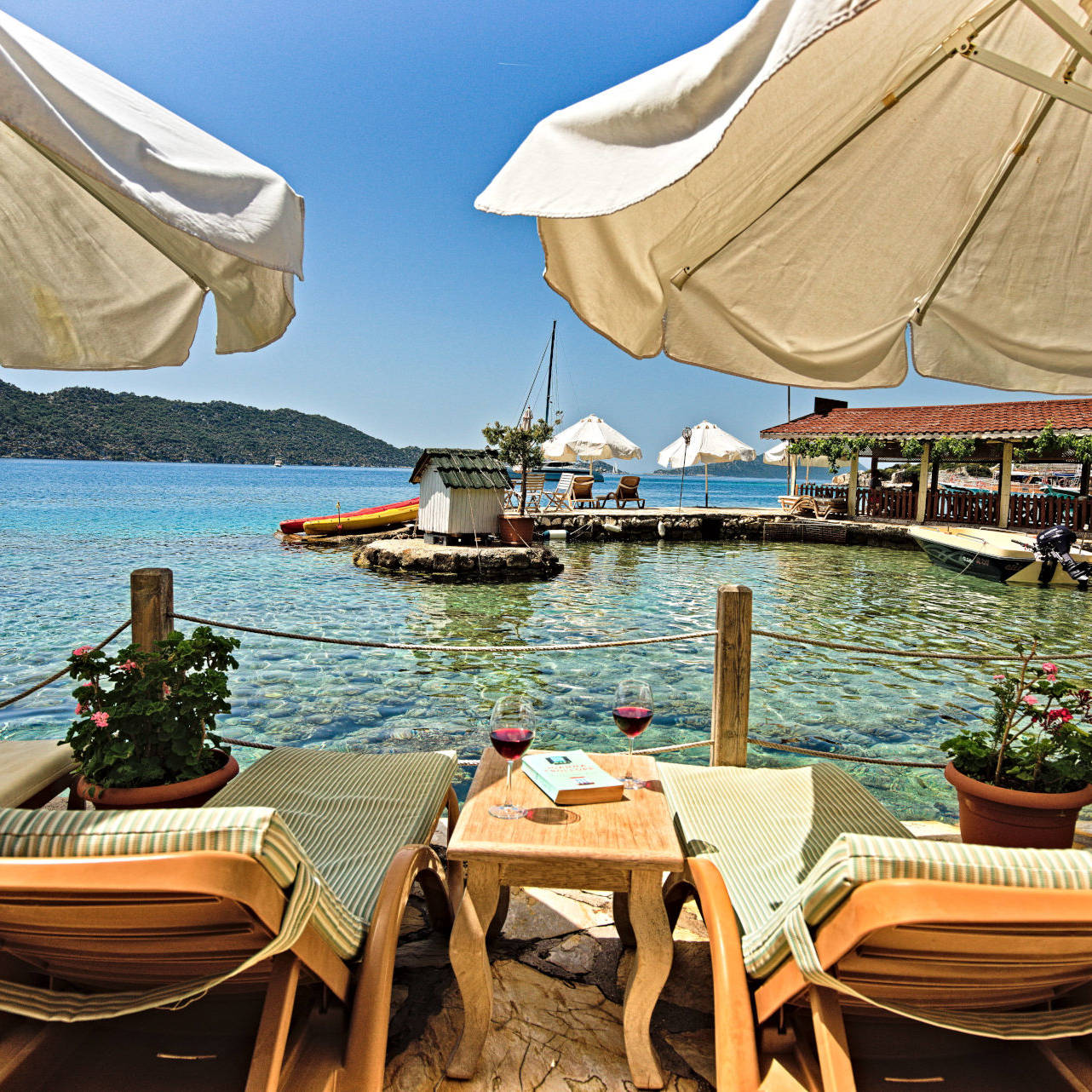
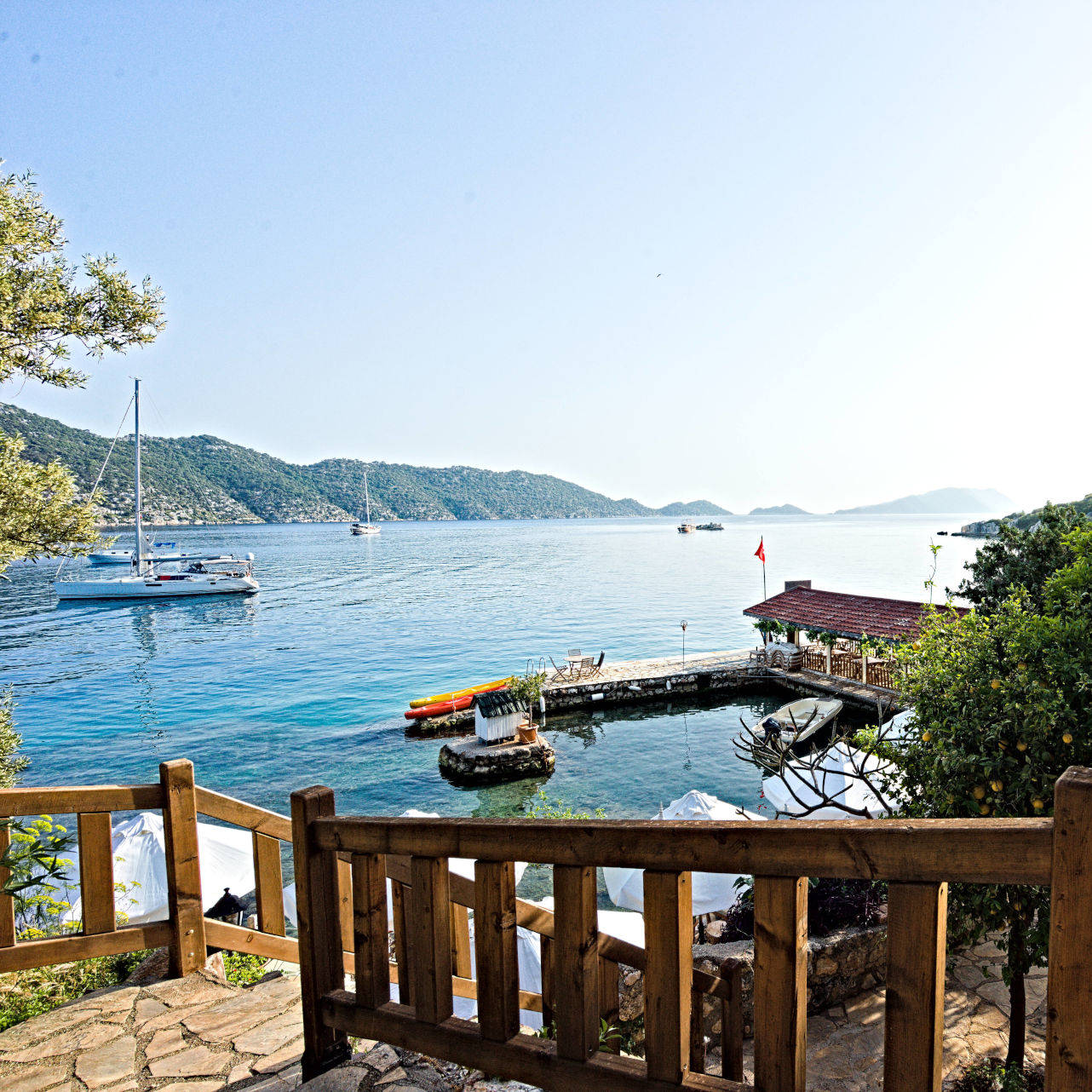
The village is on a rocky promontory, facing due South and hidden from the mainland. You get your first sight of it as your boat from Ucagiz sweeps around small islands and rocks and suddenly there it is; tumbling down to the waterfront from a Norman castle on the hilltop.
Kekova
MOUNTAINOUS COAST
This is the mountainous Lycean coast of Turkey. The massive Tauros Mountains are clearly visible 15 km away. Patchily snow covered for much of the year, they go up to 10,000ft. The foothills go down into the sea, so the coast at Kaleköy has many islands, coves, cliffs, caves and inlets. There are no beaches. The sea life is rich. A surprisingly large variety of fish is available in the local restaurants.
VILLAGE LIFE
There are about 12 families in the village, 100 people in all. With hardly any exceptions they are all amazingly friendly and generous, and they have a natural dignity and honesty, which is rare in Western Europe. In the absence of hippies doors are never locked.
They quickly get to know your name, especially the girls trying gently to charm you into buying embroidered scarves, bracelets and necklaces that they make themselves. Most locals speak some English or German. People returning for a second holiday get a shy smile of recognition, then a warm welcome.
Because the whole village looks down onto the water, and because the only way to come and go is by boat, Everybody can see who is coming and going and guess very accurately what their business is. This gives rise, not so much to village gossip, though there is lots of that, as to a sense of community. . You can feel that the village is one big private club. They accept foreign visitors readily, and it feels a privilege to be accepted.
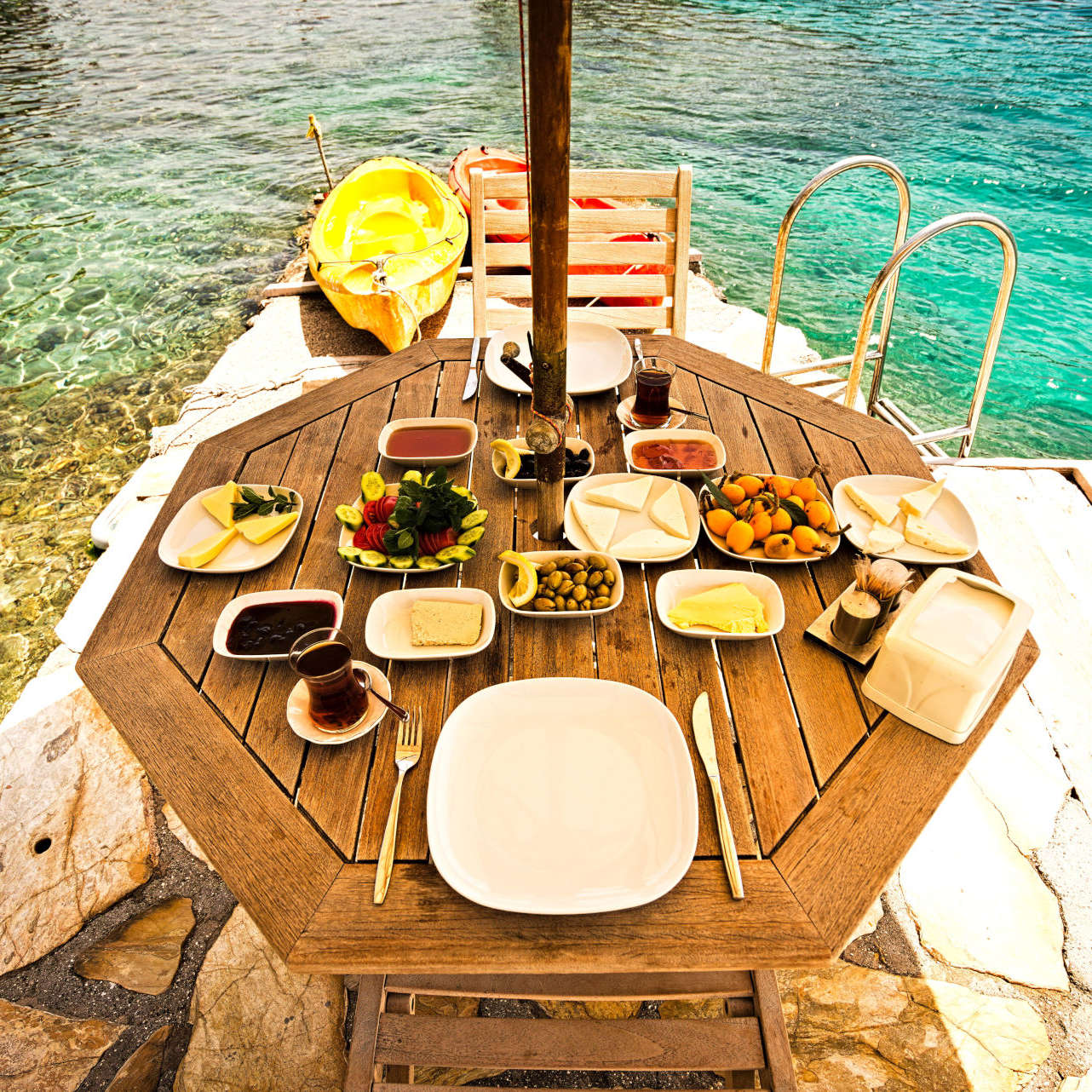
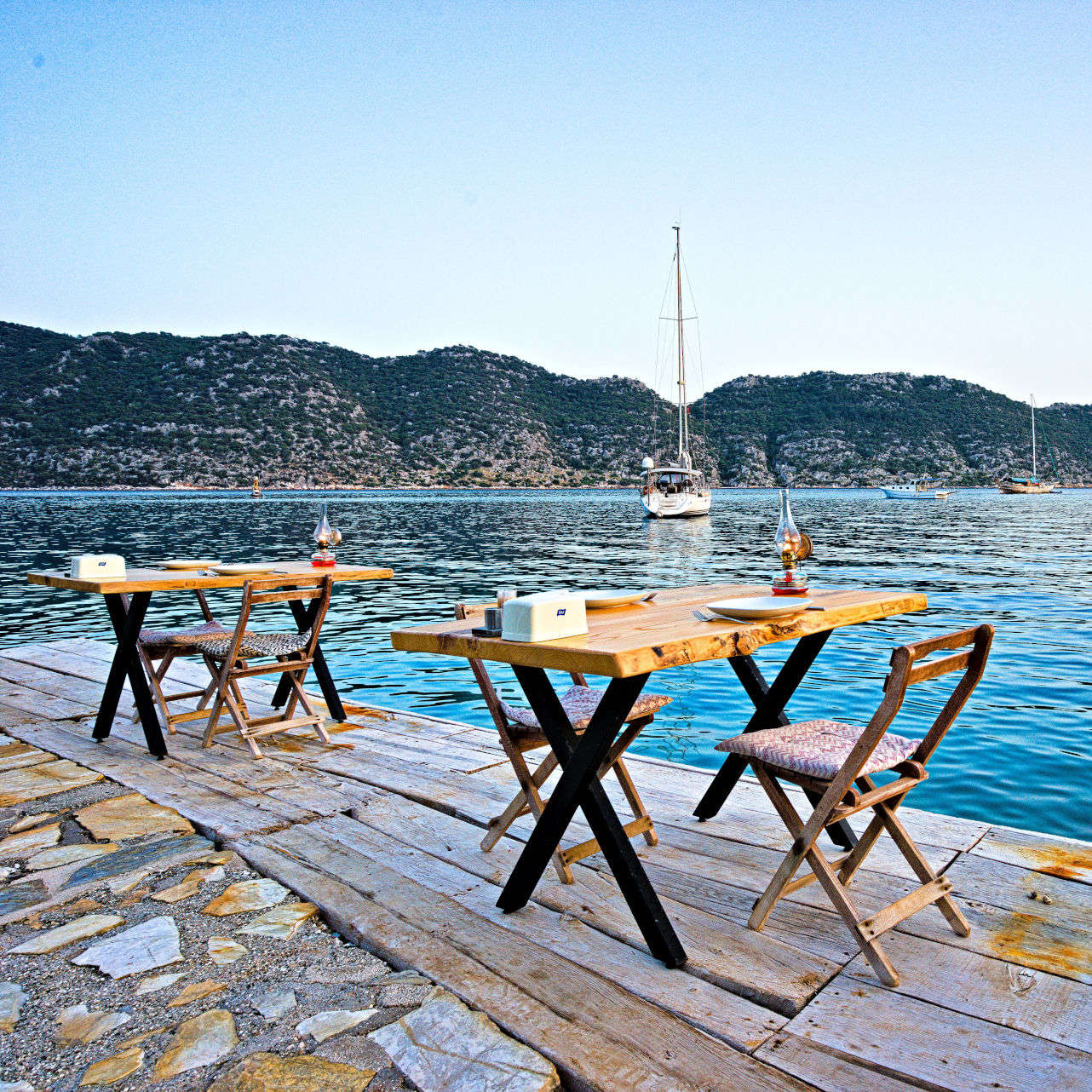
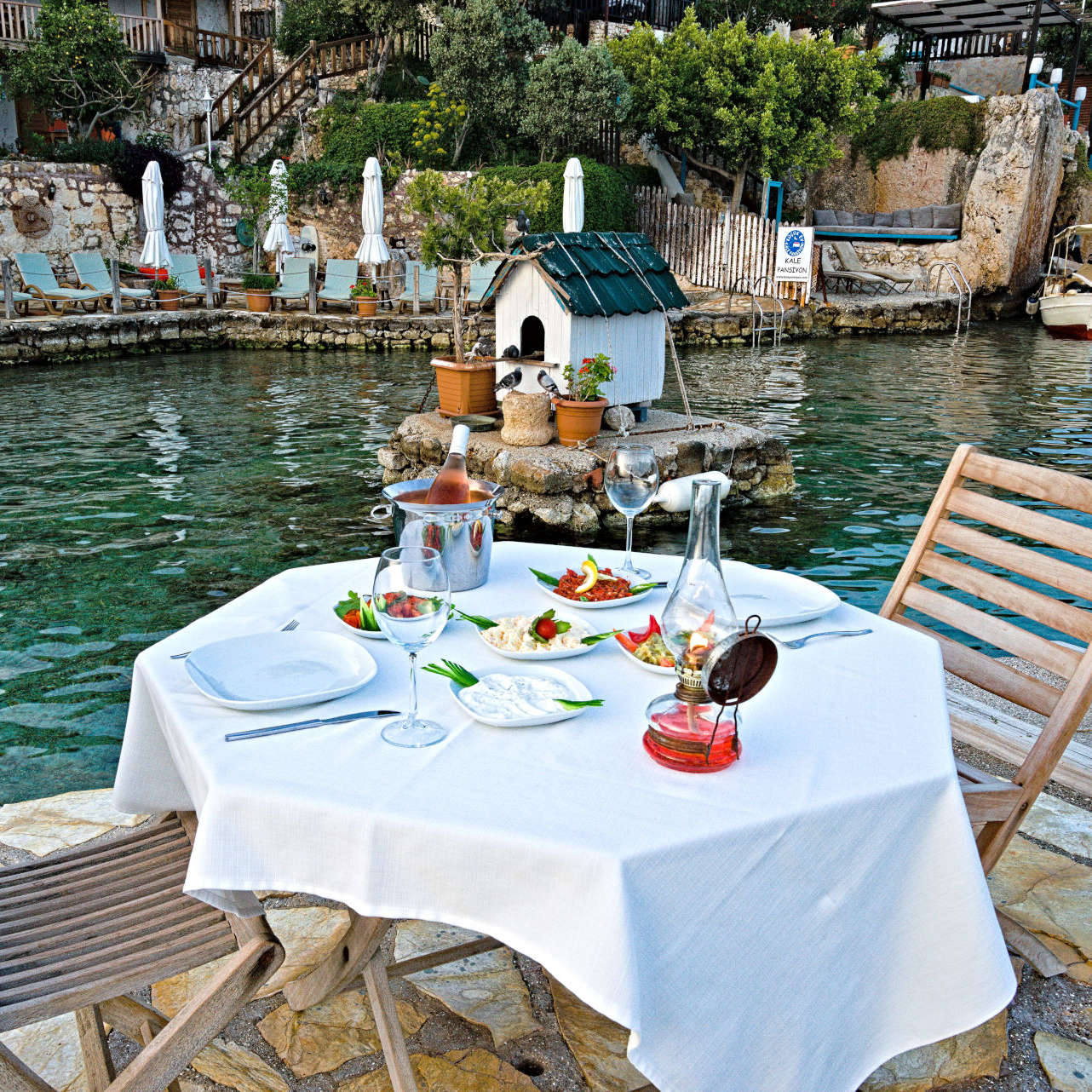
There are half a dozen simple restaurants in the village.
The actual name of the village is delightfully confusing. Kale Koyu, probably the most commonly used name, simply means castle village, and few people more than 20 miles away will know that name. There are several castle villages, and this is a small one. Ucagiz Kale Koyu is also used but it's a bit of a mouthful. The name on British admiralty charts is Kale Ucagiz but they give that same name to the bigger local village of Ucagiz as well, so that's not very convincing. The villagers themselves mostly call it Kekkova which is the name of the island opposite. The old Greek name for the village was Simena and this is the name preferred by knowledgeable travellers and intellectually minded tourists. So you can take your pick and are well advised to select the name best suited to your company: taxi driver, archaeologist, yachtsman, villager, etc.
NO CARS, NO ROADS,
You can only get to Kale Koyu by boat. There are no roads; no cars. People get around by boat. Most families have at least one of the 20 ft, traditional, slow revving, diesel engined, wooden caiques. They use them as frequently as one uses the family car. And of course the villagers do a lot of small boat fishing. Some of the girls are keen rowers and fishers.
SUPERB WEATHER
You can only get to Kale Koyu by boat. There are no roads; no cars. People get around by boat. Most families have at least one of the 20 ft, traditional, slow revving, diesel engined, wooden caiques. They use them as frequently as one uses the family car. And of course the villagers do a lot of small boat fishing. Some of the girls are keen rowers and fishers.
If you come by hired car you can leave it parked round the corner in Ucagiz.
Mains water and electricity (occasionally erratic) come to the village, and broadband internet connections are available.
ANCIENT HISTORY ALL AROUND
There are extensive ancient Lycean remains all around the area. Some are high up in the Tauros Mountains. Many of them are unexcavated. The Lyceans were in their heyday around 500 BC There are about 20 freestanding tombs up beside the Norman castle. A small ancient greek theatre is cut into the rock inside this castle. Several village houses are built onto bits of old tomb. One tomb, much photographed, stands in the waterfront. The solid piers of a substantial harbour can be clearly seen 10 feet underwater 70 yards from the village. The remains of an ancient town with half a mile of waterfront, now semi-submerged, can be seen on Kekkova Island a kilometer away mile right opposite the village. It is a tourist attraction known as 'the Sunken City'.
There are many more ancient remains in the local area. There is a walled Byzantine town 7km away at Aperlae. Myra, another ancient Greek site 15km away, is where Father Christmas (St Nicholas) lived. He was the bishop there in around 300AD.
NO MASS TOURISM ONLY DAY TRIPPERS ON BOATS
Because of the mountainous countryside the roads are narrow and winding in places. So the slow three hour drive from the nearest airports (Dalaman or Antalya) has discouraged the development of mass tourism. There are no large hotels or holiday villages within 20 km. And the absence of roads to the village it self makes mass tourism almost impossible.
Many visitors come to the village on day trips by boat. They stay an hour or two, going up to the castle and tombs, visiting the 'sunken city' and eating on board their boats. During the day it can get quite noisy and busy. But mornings and evenings and at weekends they are all gone and the village is quietly time-warped 70 years back in time.